

Free Consultation

IRS penalties can build up fast, sometimes adding thousands of dollars to your balance before you even realize what happened.
Written by
Jared Thomas
Published in
08/2026
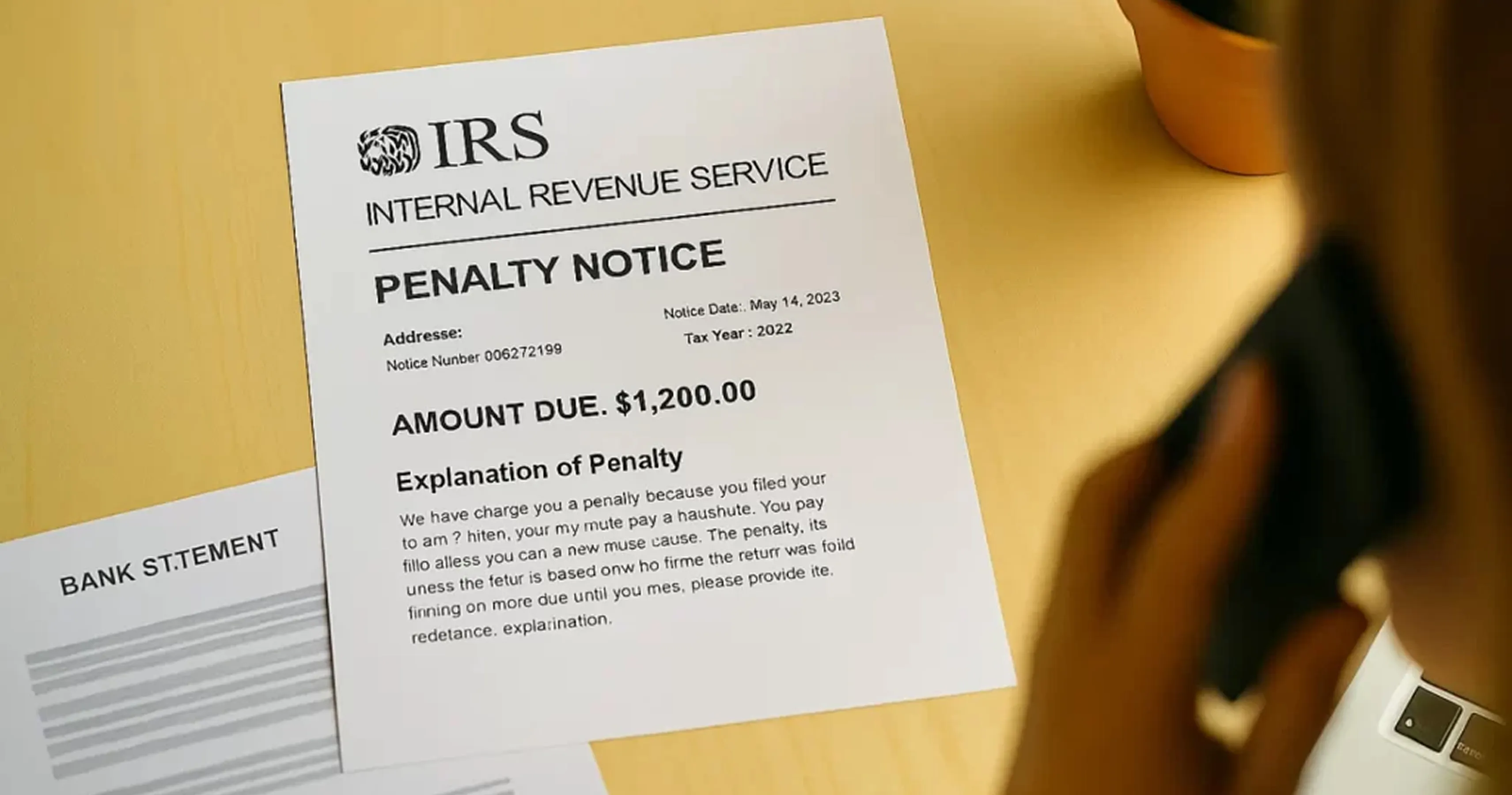
IRS penalties can build up fast, sometimes adding thousands of dollars to your balance before you even realize what happened. But here’s the part most taxpayers don’t know: many IRS penalties can be removed if you can show the agency you had a legitimate, unavoidable reason for falling behind. This is called “reasonable cause,” and when used correctly, it can stop penalties, reduce what you owe, and help you finally get back in good standing.
The challenge? Most people request penalty abatement the wrong way. They write vague explanations, don’t include evidence, or fail to show how the situation prevented them from filing or paying on time.
“Reasonable cause” is the IRS’s way of acknowledging that life happens, and sometimes circumstances beyond your control prevent you from filing or paying taxes on time. If you can show that you exercised ordinary business care and prudence, but still couldn’t meet your obligations, the IRS may remove penalties tied to your tax balance.
Reasonable cause does not erase your actual tax debt, but it can eliminate or reduce penalties such as failure-to-file, failure-to-pay, or payroll deposit penalties. To qualify, you must clearly explain what happened, when it happened, how it directly impacted your ability to comply, and how you addressed the issue once it passed.
Failure-to-file penalties
These penalties apply when you submit your tax return late. If a serious disruption such as illness, natural disaster, or missing records made timely filing impossible, the IRS may remove these charges once you provide a clear explanation and supporting documentation.
Failure-to-pay penalties
If you filed on time but couldn’t pay the taxes you owed due to unexpected financial hardship or events beyond your control, the IRS may waive failure-to-pay penalties. You must show that you exercised reasonable financial care and intended to pay as soon as you could.
Failure-to-deposit payroll tax penalties
Businesses that miss payroll tax deposit deadlines can request reasonable cause relief if they can prove that circumstances like banking errors, system failures, or emergencies prevented timely deposits. The IRS looks for evidence that the business acted responsibly both before and after the issue.
Accuracy-related penalties (in some cases)
These penalties occur when income is underreported or deductions are improperly claimed. Reasonable cause may apply if the error happened because you relied on incorrect professional advice, experienced a serious disruption, or had complex tax issues you attempted to handle in good faith.

The IRS evaluates reasonable cause requests based on whether you exercised ordinary business care and prudence, but were still unable to meet your tax obligations due to circumstances beyond your control. Below are the most commonly accepted situations.
Serious illness or medical emergencies
If you or an immediate family member suffered a severe illness, hospitalization, surgery, or medical crisis during the time taxes were due, the IRS often accepts this as reasonable cause. Medical records, hospital statements, or doctor letters strengthen your case.
Natural disasters or catastrophic events
Events like hurricanes, floods, tornadoes, fires, or other federally declared disasters can disrupt access to finances, records, and communication. The IRS frequently grants relief when these events occur around filing or payment deadlines.
Death in the immediate family
The death of a spouse, parent, child, or other close family member, especially near the tax deadline, can justify late filing or payment. Providing obituary information or funeral documentation helps support the request.
Unavoidable absence (deployment or overseas work)
If you were on military deployment, traveling for unavoidable work obligations, or outside the country without access to essential documents, the IRS may consider it reasonable cause, particularly when circumstances were out of your control.
Incorrect advice from a tax professional
If a qualified tax professional gave you wrong instructions or filed something incorrectly despite you providing accurate information, the IRS may grant relief. You must show evidence of the advice and that you relied on it in good faith.
Records destroyed by fire, flood, theft, or technology failure
Loss of records due to events like fire damage, water damage, a break-in, or even major digital data loss can make it impossible to file accurately on time. Proof of the event increases the likelihood of approval.
Inability to obtain necessary records
If you made reasonable attempts to gather missing forms, financial documents, or verification but still couldn’t obtain them, the IRS may consider this a valid cause for delay.
Reasonable reliance on IRS information
If the IRS provided incorrect written or verbal guidance that caused you to file or pay incorrectly, you may qualify for penalty removal, especially if you can document the interaction or IRS correspondence.
Successfully getting IRS penalties removed depends on how clearly and convincingly you present your story. The IRS wants proof, timelines, and evidence that you acted responsibly. Here’s the exact process to follow to maximize your chances of approval.
Step 1: Gather documentation
Collect any documents that support your situation: medical bills, hospital records, death certificates, insurance claims, police reports, letters from employers, deployment orders, or statements from tax professionals.
Step 2: Create a clear timeline of events
Write down the dates of the event (illness, disaster, death, error, and so on) and compare them to your tax deadlines. The IRS wants to see direct overlap between the issue and when the tax obligation was due.
Step 3: Explain how the situation affected your ability to file or pay
Don’t assume the IRS will connect the dots. Spell out exactly how the event made it impossible to meet your tax obligations. For example:
The IRS is more likely to approve relief when the cause-and-effect connection is undeniable.
Step 4: Show that you acted responsibly once the issue passed
The IRS wants evidence that you resumed compliance as soon as reasonably possible. This includes filing late returns promptly, making payments after recovering, requesting transcripts, or contacting the IRS to resolve the issue.
Step 5: Submit a formal written request
Send a penalty abatement letter or include an explanation with your response to the IRS notice. Your request should be:
You may also submit Form 843 (Claim for Refund and Request for Abatement) in certain cases. A strong written narrative is often the difference between approval and denial.
Step 6: Respond to IRS follow-up questions
If the IRS needs clarification, they’ll send a letter or ask for additional documents. Respond promptly. Delays or incomplete responses can lead to automatic denial.

There are several ways to request IRS penalty relief, and the best method depends on your situation, the type of penalty, and whether the IRS has already contacted you. Below is a clear breakdown of each method and when to use it.
Written request with your tax return
If you're filing a late return, you can include a written explanation directly with your filing. This letter should outline your reasonable cause, timeline, supporting facts, and documentation.
Calling the IRS directly
For straightforward cases, especially First-Time Penalty Abatement (FTA), you can call the IRS and request relief by phone. An agent can remove penalties on the spot if you qualify.
Responding to a notice
If you received a CP or IRS penalty letter, you can respond in writing with your reasonable cause explanation and supporting evidence. Send your response before the deadline listed on the notice.
Using Form 843
Form 843 (Claim for Refund and Request for Abatement) is used for certain types of penalty abatement requests, especially:
This method is more formal and often used when the standard written request is not appropriate.
Filing an appeal if denied
If the IRS denies your request, you still have options. You can file an appeal through the IRS Independent Office of Appeals. This involves submitting a detailed explanation, additional documentation, and arguing why the original decision was incorrect.
When requesting penalty relief, the IRS offers two major paths: First-Time Penalty Abatement (FTA) and Reasonable Cause relief. While both can remove penalties, they work very differently, and understanding the distinction helps you choose the option with the highest chance of approval.
First-Time Penalty Abatement (FTA) is the simplest form of relief. It’s available to taxpayers who have a clean compliance history and haven’t been penalized in the last three years.
FTA doesn’t require an explanation or documentation. You only need to show that you’ve filed all required returns and are currently compliant. Because it’s based purely on your filing history, it is often the fastest and most straightforward way to remove failure-to-file or failure-to-pay penalties.
Reasonable Cause, on the other hand, requires you to prove that a major, unforeseen event prevented you from filing or paying on time. This could be a medical emergency, a natural disaster, loss of records, bad tax advice, or other circumstances beyond your control.
Reasonable Cause requests require a detailed explanation, documentation, a timeline of events, and proof that you acted responsibly once the issue passed.

Safeway Tax streamlines the entire penalty abatement process so you don’t have to deal with the IRS alone. We start by reviewing your IRS transcripts to identify which penalties qualify for removal and whether you’re eligible for First-Time Abatement, Reasonable Cause, or both.
Our team gathers all necessary documentation, builds a clear timeline of events, and prepares a strong, IRS-compliant abatement request that aligns with official agency standards. We write and submit the penalty relief letter on your behalf, manage all communication with the IRS, and handle any follow-up questions or appeals.
IRS balances rarely stay the same. They grow month after month through penalties, interest, and compounding charges


Running a small business often means juggling payroll, invoices, suppliers, and cash-flow surprises

Crypto investors often realize too late that every trade, swap, or sale can create a taxable event especially in years

Owner-operators work long hours, run heavy miles, and manage expenses that change with every load

Many nurses unknowingly take contracts that create tax-home problems, trigger multi-state filing requirements

If you’ve received an IRS notice mentioning a tax lien or levy, it’s completely normal to feel overwhelmed

Crypto trading feels exciting until tax season arrives and you realize your wallets, swaps, and rewards don’t neatly fit into a standard tax form.

Missing a quarterly tax payment feels stressful, but it happens to freelancers, small business owners

Ignoring an IRS letter might feel easier than opening it, especially when you’re stressed, behind

Gig workers often discover that earning independent income brings unexpected IRS attention.

IRS debt grows quietly, and many taxpayers don’t realize they’re in trouble until garnishments, liens, or intimidating letters arrive.

Discover how our resources and experts can help you keep more of your money.

Choosing the right IRS relief program can be the difference between finally getting ahead or staying trapped in tax debt for years.
.png)
Many 1099 workers discover they owe the IRS only after a stressful notice arrives, because
IRS penalties can build up fast, sometimes adding thousands of dollars to your balance before you even realize what happened.

Falling behind on taxes is extremely common for self-employed and 1099 workers. Income changes, missing 1099 forms
Receiving an IRS Final Notice is one of the most serious moments a taxpayer can face.

Freelancers often discover that earning income independently brings freedom but also tax obligations that can

Few things hit harder than waking up to a bank account you can’t touch. Your debit card declines

Tax debt and liens can stall a mortgage, but they don't always kill the deal. Here's what lenders look for and how to clear the path.
Once submitted, your information is reviewed by an IRS Relief Specialist, who will follow up to explain which IRS relief options may apply and answer any questions you have.
SafewayTax helps individuals and businesses address complex tax issues. By providing a few details, our team can quickly review your situation and help you move forward with confidence
© Copyright 2026 SafewayTax | All Rights Reserved.


Any estimates, projections, or statements on the Website regarding potential program performance are based on historical outcomes and client testimonials that reflect individual circumstances. Results depend on the specific facts of each client’s situation and may vary significantly. Your outcomes will depend on factors including, but not limited to, your financial condition and your ability to provide SafewayTax with complete, accurate, and timely information.
You are encouraged to carefully review all program materials before enrolling in any Service.
SafewayTax does not guarantee that your tax liability will be reduced by any specific amount or percentage, that your taxes will be resolved within a particular timeframe, or that you will qualify for any Internal Revenue Service (“IRS”) program or relief option. Interest and penalties may continue to accrue until your tax liability is fully satisfied with the IRS.
SafewayTax is an independent tax resolution firm and is not affiliated with or endorsed by the IRS. We do not assume your tax liabilities, make payments to creditors on your behalf, or provide legal, accounting, bankruptcy, or formal tax advice unless expressly stated in a separate written agreement. Services may not be available in all states, and fees may vary depending on jurisdiction and case complexity.
By providing your contact information, you expressly consent to receive communications from SafewayTax, including phone calls and SMS text messages, at the telephone number you provide. Such communications may include service-related updates, marketing messages, and other informational notices. Standard messaging and data rates may apply, and you are responsible for any charges imposed by your carrier.