

Free Consultation


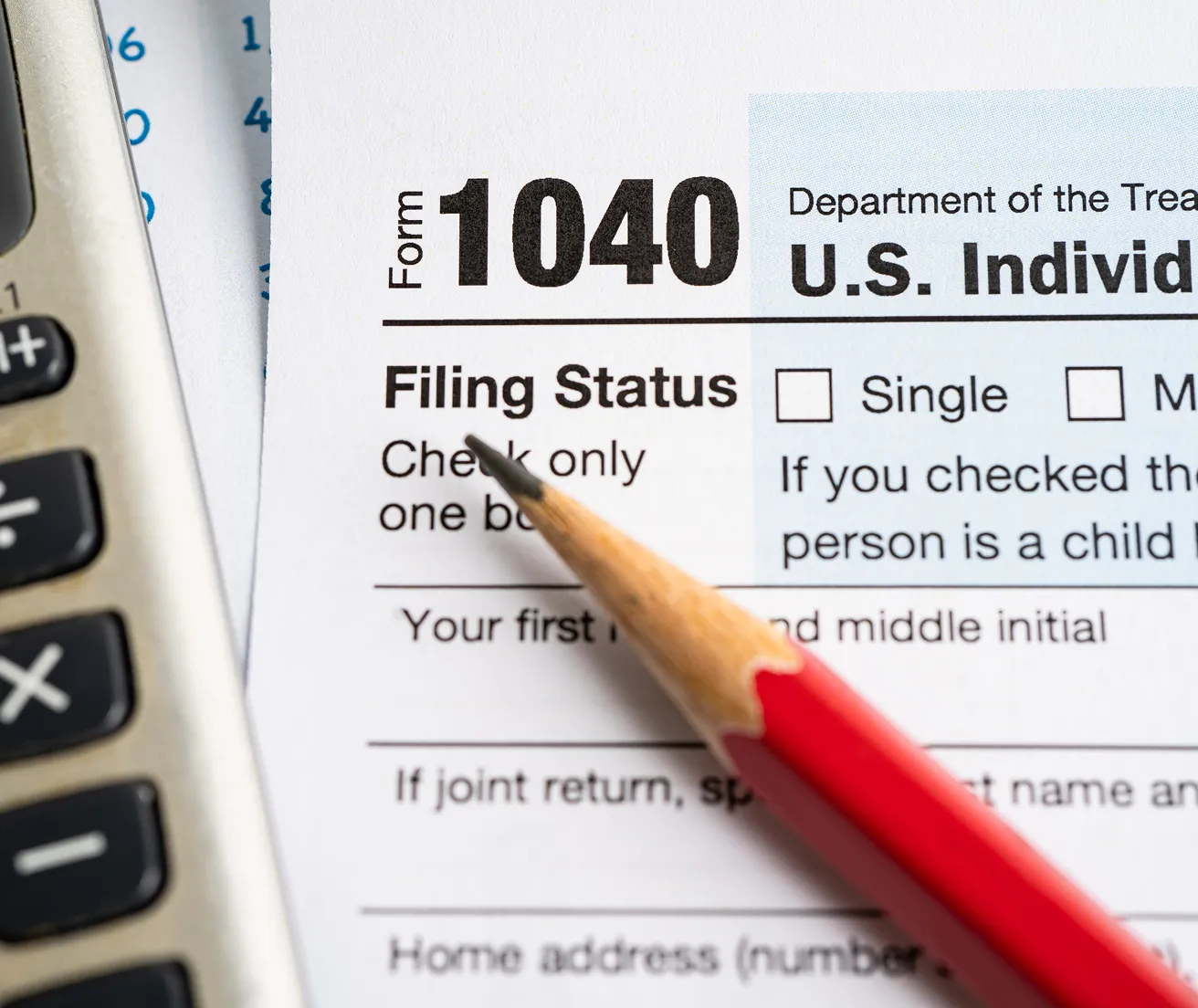
Form 1040 is the primary individual income tax return the IRS uses to calculate your federal tax outcome for the year. You use it to report income, claim deductions, apply credits, and determine whether you owe tax or qualify for a refund. The form captures wages, self-employment income, rental income, investment activity, retirement distributions, and dependent-related benefits through structured line items and attached schedules.
The IRS designs Form 1040 as the central hub of your filing. Each schedule connects a specific tax activity to the main return: Schedule C reports business income, Schedule A reports itemized deductions, Schedule D reports capital gains, and Schedule E reports rental and pass-through income. These attachments give the IRS a complete financial profile tied to your filing status, dependents, and yearly income sources.
You must file Form 1040 when your income, tax situation, or credits meet the IRS filing requirements. The IRS sets different thresholds for each filing status, and each status determines your standard deduction and tax calculation rules.
CPAs can represent you in audits, notices, appeals, and tax account issues. Their state licenses allow full representation before the IRS.
You file jointly when you and your spouse combine income, deductions, and credits on one return. You must file if your combined income passes the IRS threshold or if one spouse has self-employment income or unreported tax items.
You use Head of Household status when you’re unmarried, you pay more than half of household costs, and you support a qualifying dependent. You must file when your income exceeds the HOH threshold or when you claim credits linked to dependents.
You file separately when you and your spouse keep finances apart or when legal or financial reasons require separate returns. You must file if your income exceeds the lower MFS threshold or if you owe taxes not covered by withholding.
You use Qualifying Widow(er) status for two years after a spouse’s death when you support a dependent child. You must file when your income exceeds the threshold linked to this status or when you claim dependent-related credits.
You complete Form 1040 by entering your personal details, reporting all income sources, claiming deductions, applying credits, and attaching every schedule connected to your situation. Each section of the form follows a strict line-to-schedule structure that guides the IRS through your financial year.

Start With Personal Information
You enter your name, address, Social Security number, and filing status. You list dependents with their identification details and their credit eligibility. Accurate personal data prevents processing delays and identity-related IRS notices.

Report All Income
Candidates can apply by submitting their resume and a cover letter through our website or job postings. We review each application carefully to ensure alignment with the qualifications and skills required for the role.

Enter Adjustments and Compute AGI
Candidates can apply by submitting their resume and a cover letter through our website or job postings. We review each application carefully to ensure alignment with the qualifications and skills required for the role.

Choose Your Deduction Method
Candidates can apply by submitting their resume and a cover letter through our website or job postings. We review each application carefully to ensure alignment with the qualifications and skills required for the role.

Calculate Tax and Apply Credits
Candidates can apply by submitting their resume and a cover letter through our website or job postings. We review each application carefully to ensure alignment with the qualifications and skills required for the role.
Add Other Taxes
Collect total wages, federal income tax withheld, Social Security wages, Medicare wages, and deposit history for the quarter.
Record Payments and Refund Optionsё
Candidates can apply by submitting their resume and a cover letter through our website or job postings. We review each application carefully to ensure alignment with the qualifications and skills required for the role.
Form 1040 has several variants the IRS uses to handle specific taxpayer situations. Each version follows the same core structure but adjusts eligibility rules, line items, and filing requirements.
Form 1040 uses attached schedules to organize income, deductions, credits, and additional taxes. Each schedule reports a specific activity and transfers totals to exact lines on the main return. Accurate attachment prevents IRS processing errors and mismatched income records.
You report income not listed on the main form, such as unemployment, gambling winnings, jury duty pay, and business adjustments. You also record educator expenses, HSA deductions, student loan interest, and self-employment adjustments.
You report taxes that do not appear directly on Form 1040. These include alternative minimum tax, excess advance premium credits, and other liability sources not covered by withholding.
You claim nonrefundable and refundable credits, including foreign tax credits, education credits, and the Premium Tax Credit. You also enter additional payments and withholding adjustments.
You list medical expenses, mortgage interest, state and local taxes, charitable donations, and casualty losses. You attach Schedule A when itemized deductions exceed your standard deduction.
You report taxable interest and ordinary dividends when amounts exceed IRS thresholds or when foreign accounts apply.
You report sole-proprietor income, business expenses, depreciation claims, and gross receipts. This schedule applies to freelancers, contractors, and small business owners.
You report investment gains, stock sales, crypto transactions, and asset disposals. You attach Form 8949 for itemized transaction details.
You report rental real estate income, partnership income, S-corporation income, royalties, and trust distributions. K-1 forms feed directly into this schedule.
You report farm revenue, crop insurance proceeds, farm-related expenses, and agricultural deductions.
You report taxes for household employees such as nannies or in-home caregivers. This includes Social Security, Medicare, and federal unemployment taxes.
You use income averaging rules to calculate tax based on multi-year activity.
You calculate eligibility for age- or disability-based tax credits linked to income thresholds.
You calculate Social Security and Medicare taxes owed on self-employment income.
You document qualifying children and earned income values to compute the credit.
Form 1040 errors usually come from missing information, incorrect numbers, and unreported income. Each mistake affects your tax calculation, refund timing, or IRS correspondence. Fixing these errors requires corrected entries, supporting documents, and, in some cases, filing Form 1040-X.
Wrong Social Security numbers, birthdates, or filing status entries cause processing delays.
Update personal details and resubmit electronically or file an amended return when the IRS has already processed the original.
Schedules such as C, D, E, SE, or A are often missing even when the main form references them.
Attach the required schedule, confirm line-to-schedule consistency, and file Form 1040-X if the IRS completed the return without them.
Mismatched income triggers CP2000 notices and IRS recalculations.
Compare employer and payer records, include every W-2 and 1099, and correct totals on an amended return if income was missed.
Incorrect calculations, wrong AGI values, or inaccurate credit amounts change your tax liability.
Use verified tax software or IRS worksheets, check line instructions, and submit a corrected version when totals shift.
Errors occur with the Child Tax Credit, Earned Income Credit, education credits, or dependent eligibility.
Recheck qualification rules, update dependent data, and submit Form 8862 when the IRS requires recertification.
Choosing itemized deductions when the standard deduction is higher or vice versa, changes taxable income.
Recalculate both methods and amend the return if the wrong deduction changed your tax result.
Unsigned paper returns remain unprocessed and cause refund delays.
Sign and resubmit the physical return or e-file with verified digital credentials.
Wrong withholding numbers or missed estimated tax payments distort your balance due.
Match W-2 and 1099 withholding entries to supporting forms and correct totals through an amendment if needed.
Form 1040 organizes income by source, and each category flows into a specific line or schedule. Accurate reporting prevents IRS mismatches, CP2000 notices, and incorrect tax calculations.
W-2 Wages
You report W-2 wages on the wage line of Form 1040. You transfer federal withholding, Social Security wages, and Medicare wages directly from each W-2.

1099-NEC Self-Employment Income
You report self-employment income on Schedule C. You record gross receipts, business expenses, and net profit. You calculate self-employment tax on Schedule SE.
1099-MISC Income
You report royalties or miscellaneous income on Schedule E or Schedule 1, depending on the activity type.
Interest Income
You report interest from banks, credit unions, and financial institutions (Form 1099-INT) on Schedule B when the total exceeds IRS thresholds.


You file additional forms with Form 1040 when your income, deductions, credits, or taxes require extra documentation. Each form supports a specific activity and confirms details the IRS needs to verify your return.

Schedule C for business income
Schedule SE for self-employment tax
Form 4562 for depreciation
Form 8829 for home office expenses
Form 8949 for transaction details
Schedule D for total capital gains and losses
Form 8863 for education credits
Form 1098-T information for school reporting
Form 8962 to reconcile marketplace health insurance credits
Form 1116 for foreign tax credits
Schedule B, Part III for foreign accounts
Schedule EIC for the Earned Income Credit
Schedule 8812 for the Additional Child Tax Credit D for total capital gains and losses
Schedule E for rental properties and K-1 activity
Form 5329 for IRA penalties
Form 6251 for AMT
Schedule 2 for additional taxes
Form 1040-ES information for quarterly payments
Schedule H for nanny tax obligations
Form 1040 uses deductions and credits to reduce taxable income and lower your final tax bill. Deductions reduce income; credits reduce tax directly. Each item connects to a specific line, worksheet, or schedule.
You claim the standard deduction when it produces a lower taxable income than itemizing. The IRS sets yearly amounts based on filing status and age. Most taxpayers use this method because it requires no documentation.
You itemize when your deductible expenses exceed the standard deduction. You report:
You apply adjustments that reduce Adjusted Gross Income (AGI). You record:
You claim these credits for qualifying children under IRS rules. The Additional Child Tax Credit is refundable and can increase your refund even when tax liability reaches zero. You use Schedule 8812 to compute totals.
You use the Earned Income Credit when you meet earned income and dependent rules. This credit is fully refundable. You complete Schedule EIC to document qualifying children.
You claim the American Opportunity Credit and the Lifetime Learning Credit using Form 8863. These credits apply to tuition, fees, and qualifying education expenses.
You claim the Saver’s Credit when you make retirement contributions and fall within income limits. This credit supports traditional and Roth IRA contributions.
You claim the Premium Tax Credit when you purchase health insurance through the Marketplace. You reconcile advance payments using Form 8962.
You claim the Foreign Tax Credit using Form 1116 when foreign taxes apply to your investment or employment income.
Form 1040 gives you a complete snapshot of your yearly income, deductions, credits, and tax liability. This information helps you adjust withholding, plan investments, structure business expenses, and improve future refund or payment outcomes.
Shows Your Income Patterns
You track wages, freelancing income, rental activity, dividends, and capital gains. Consistent patterns help you plan estimated payments, avoid penalties, and optimize income timing for lower taxes.

Shows Your Income Patterns
You track wages, freelancing income, rental activity, dividends, and capital gains. Consistent patterns help you plan estimated payments, avoid penalties, and optimize income timing for lower taxes.
Shows Your Income Patterns
You track wages, freelancing income, rental activity, dividends, and capital gains. Consistent patterns help you plan estimated payments, avoid penalties, and optimize income timing for lower taxes.
Shows Your Income Patterns
You track wages, freelancing income, rental activity, dividends, and capital gains. Consistent patterns help you plan estimated payments, avoid penalties, and optimize income timing for lower taxes.
Once submitted, your information is reviewed by an IRS Relief Specialist, who will follow up to explain which IRS relief options may apply and answer any questions you have.
SafewayTax helps individuals and businesses address complex tax issues. By providing a few details, our team can quickly review your situation and help you move forward with confidence
© Copyright 2026 SafewayTax | All Rights Reserved.


Any estimates, projections, or statements on the Website regarding potential program performance are based on historical outcomes and client testimonials that reflect individual circumstances. Results depend on the specific facts of each client’s situation and may vary significantly. Your outcomes will depend on factors including, but not limited to, your financial condition and your ability to provide SafewayTax with complete, accurate, and timely information.
You are encouraged to carefully review all program materials before enrolling in any Service.
SafewayTax does not guarantee that your tax liability will be reduced by any specific amount or percentage, that your taxes will be resolved within a particular timeframe, or that you will qualify for any Internal Revenue Service (“IRS”) program or relief option. Interest and penalties may continue to accrue until your tax liability is fully satisfied with the IRS.
SafewayTax is an independent tax resolution firm and is not affiliated with or endorsed by the IRS. We do not assume your tax liabilities, make payments to creditors on your behalf, or provide legal, accounting, bankruptcy, or formal tax advice unless expressly stated in a separate written agreement. Services may not be available in all states, and fees may vary depending on jurisdiction and case complexity.
By providing your contact information, you expressly consent to receive communications from SafewayTax, including phone calls and SMS text messages, at the telephone number you provide. Such communications may include service-related updates, marketing messages, and other informational notices. Standard messaging and data rates may apply, and you are responsible for any charges imposed by your carrier.